F
About
Fazlur Rahman Malik (1919–1988) was a Pakistani-American scholar whose work reshaped modern study of the Qurʾan and Islamic intellectual history. Born on September 21, 1919, in the Hazara region of British India, he studied Arabic at Punjab University and completed a doctorate at Oxford with a dissertation on the philosophy of Ibn Sina (Avicenna). He taught Persian and Islamic philosophy at Durham, then Islamic studies at McGill, before returning to Pakistan to direct the Central Institute of Islamic Research from 1962 to 1968. Amid political controversy over his reformist views, he moved to the United States and in 1969 became the Harold H. Swift Distinguished Service Professor of Islamic Thought at the University of Chicago, where he built a leading program in Near Eastern studies and taught until his death in Chicago on July 26, 1988.
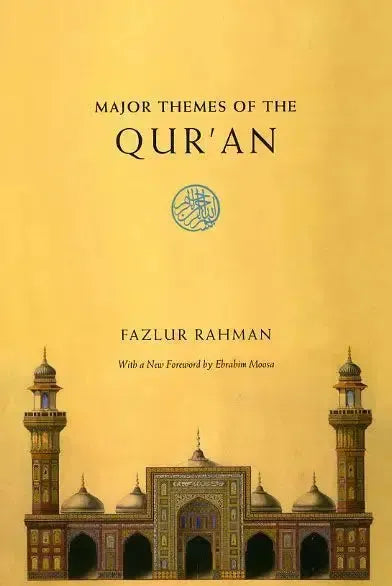
Rahman is associated with a "neo-modernist" approach that took classical Islamic learning seriously while engaging modern thought. His best-known proposal, the "double movement" method of interpretation, reads Qurʾanic rulings first within their historical setting and then derives principles for present application. His landmark books include Islam, Islamic Methodology in History, Prophecy in Islam, Revival and Reform in Islam, Major Themes of the Qurʾan, and Islam and Modernity. Major Themes endures as a standard introduction to the scripture's ideas of God, humanity, society, prophethood, and the hereafter.
Rahman is associated with a "neo-modernist" approach that took classical Islamic learning seriously while engaging modern thought. His best-known proposal, the "double movement" method of interpretation, reads Qurʾanic rulings first within their historical setting and then derives principles for present application. His landmark books include Islam, Islamic Methodology in History, Prophecy in Islam, Revival and Reform in Islam, Major Themes of the Qurʾan, and Islam and Modernity. Major Themes endures as a standard introduction to the scripture's ideas of God, humanity, society, prophethood, and the hereafter.