م
About
Martin Lings (1909-2005 CE), known by his Muslim name Abu Bakr Siraj al-Din, was an English scholar, author, and translator who became one of the most respected Western voices on Islamic spirituality and the Sufi tradition. Born in Burnage, Manchester, he read English at Oxford, where he studied under C. S. Lewis and the two became lasting friends. Through the writings of Rene Guenon and Frithjof Schuon he was drawn to Islam, embracing the faith and the Shadhili-Darqawi-Alawi path associated with Schuon's perennialist circle. He taught for years at the University of Cairo and later served as Keeper of Oriental Printed Books and Manuscripts at the British Museum and the British Library.
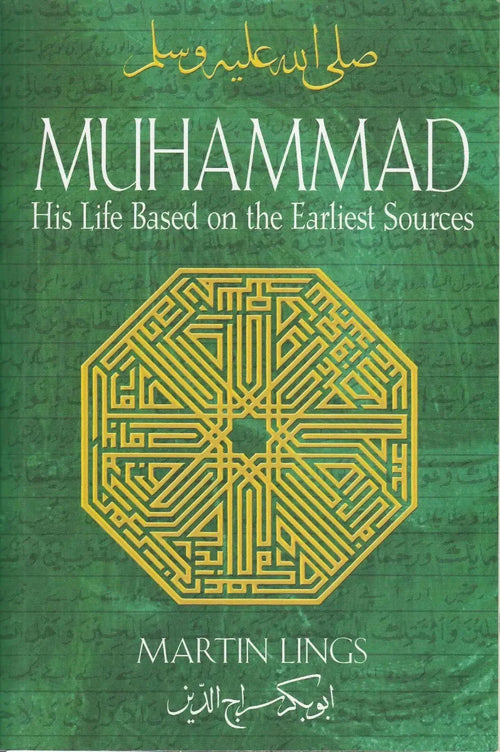
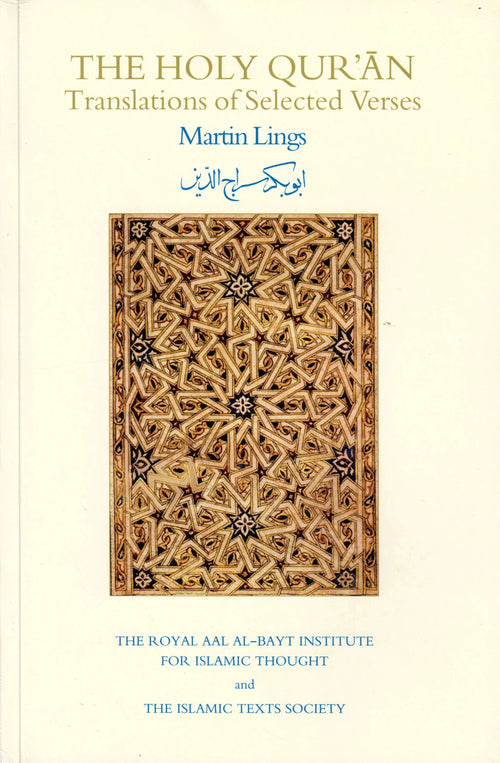
Lings is most loved for Muhammad: His Life Based on the Earliest Sources (1983), composed almost entirely from the eighth- and ninth-century Arabic sira and hadith material, and widely praised as the finest biography of the Prophet in the English language. His doctoral study A Sufi Saint of the Twentieth Century introduced English readers to Shaykh Ahmad al-Alawi of Mostaganem. Other works include The Book of Certainty on the Sufi doctrine of faith and gnosis, A Return to the Spirit, translations of selected Qurʾanic verses, and an anthology of medieval Sufi poetry. He also wrote on the spiritual dimension of Shakespeare. His calm, luminous prose continues to shape how English readers encounter the Prophet and the inner life of Islam.
Lings is most loved for Muhammad: His Life Based on the Earliest Sources (1983), composed almost entirely from the eighth- and ninth-century Arabic sira and hadith material, and widely praised as the finest biography of the Prophet in the English language. His doctoral study A Sufi Saint of the Twentieth Century introduced English readers to Shaykh Ahmad al-Alawi of Mostaganem. Other works include The Book of Certainty on the Sufi doctrine of faith and gnosis, A Return to the Spirit, translations of selected Qurʾanic verses, and an anthology of medieval Sufi poetry. He also wrote on the spiritual dimension of Shakespeare. His calm, luminous prose continues to shape how English readers encounter the Prophet and the inner life of Islam.